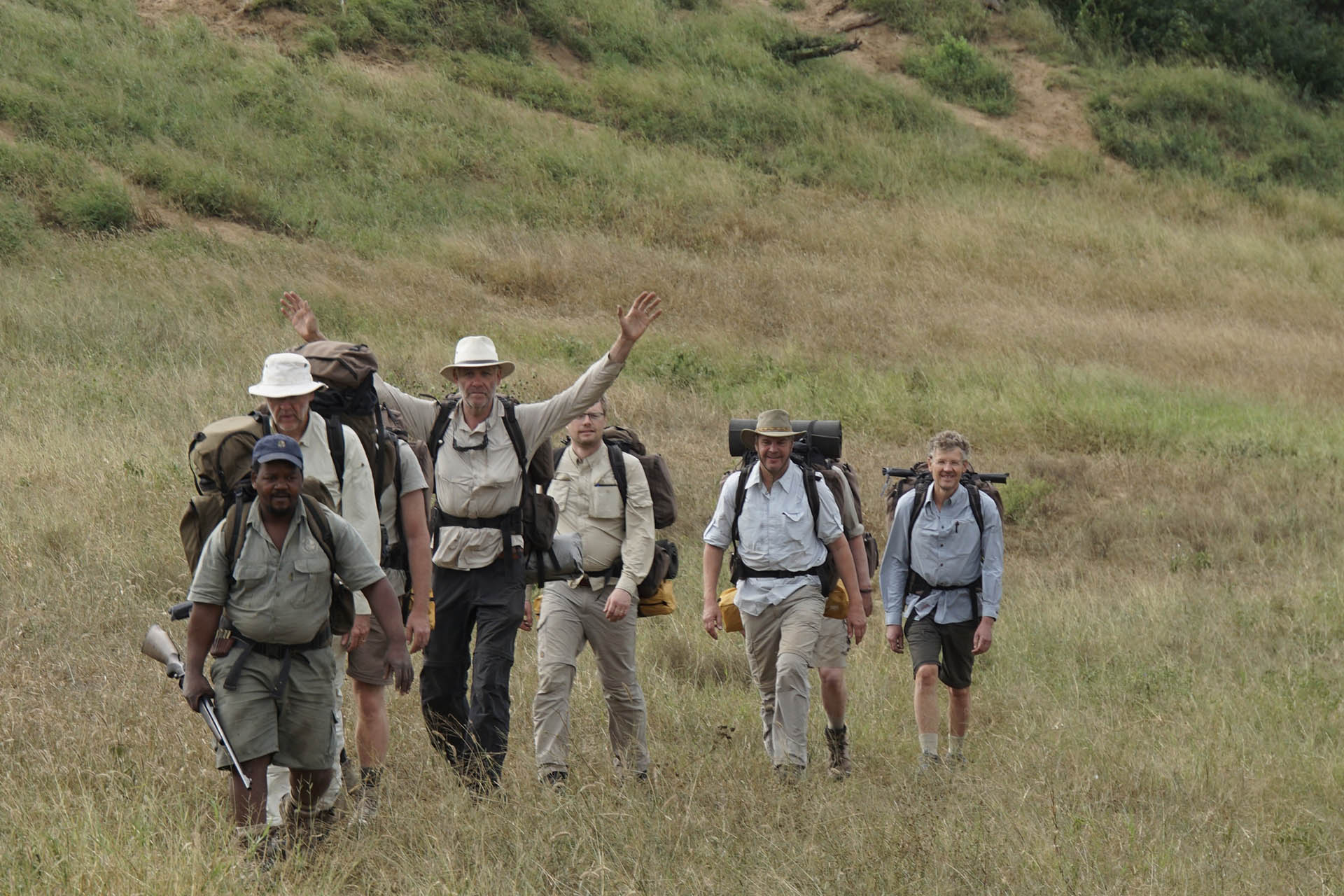
The healing and inspiring effect that nature can have is something that Boy and Niek van Droffelaar have been aware of for years and are now professionally engaged in. After his retirement, father Boy plunged into scientific literature research on the impact of nature experiences on leadership development and received his PhD on the subject in 2020. Son Niek is founder at Kingfishers, a company that guides leadership programs and development paths, using nature as a guide. Together they create the podcast Leaders into the Wild, in which they speak with guests about the effect of wilderness and nature experiences on their careers and lives.
Where did your fascination with the influence of nature experiences on career development originate?
“So my interest in this subject started after I retired,” Boy says. “At the time, I was taking quite a turn for the worse due to having to undergo heart surgery. I realized that during my working life I sometimes got past myself and decided to coach others to keep them from that. It was in that context that the Foundation of Natural Leadership ‘s wilderness trails came my way.
“The first trail that I did myself was such a life-changing experience – both in terms of professional and personal insights – that I decided to take the facilitator training with the organization, which now also makes me competent in guiding these kinds of trails. When it turned out that there is incredibly little to be found in the literature about the effect of these kinds of trails, I decided to do my own research into it which thus eventually resulted in a PhD program at the University of Wageningen.”
“With a father who dived into the subject so much, of course I couldn’t be left behind,” laughs Niek, who went on to study psychology at the time his father retired. “We talked a lot about this subject. At the Kingfishers, my background as a psychologist and my belief that nature connects and inspires come together in a beautiful way in the programs we put together for our clients.”
What are the lessons professionals can take away from nature?
“Going into unspoiled nature and being completely assigned to yourself there creates an awareness that there is no room for in our daily hectic lives,” Boy states. “I noticed that myself during the trails I did in Africa. You have the peace and space to really look around you which makes things fall into place and you start to see connections you didn’t see before.”
“For example, I myself experienced in a South African nature park that we were about to cross a river when an elephant approached from the other side. Such an encounter can be life-threatening if the animal feels threatened. But when we gave him space, he crossed calmly, sniffed curiously at the backpacks we had already put down on the riverbank and continued on his way. That moment grabbed me and made me realize that at times it can be very important to take a break and give another person space.”
“Nature is so much bigger and more powerful than we are, that causes self-reflection. You start to realize that we as humans are part of it and we should cherish that. It makes you humble.”
“During my research, I saw that participants on wilderness trails almost without exception call it a life-changing experience and that it changes their leadership style from ‘ego-system awareness’ to more ‘eco-system awareness,’ which undeniably has a positive effect on their organizations. In summary, they state that there has been a transformation from a culture of conducting and controlling to a culture of trusting and connecting. From a focus on short-term targets to a purpose-driven culture.”
“In addition, many participants also speak of an authentic self-confidence that they take with them from the experience because they were on their own during the process and succeeded.”
In the course of his work, Niek also sees what happens when outside influences are removed. “In my work I see not only the influence of nature on leadership, but also what it can do within a team,” he says. “At first people get displaced when we go into nature without laptops and phones, but soon they start paying attention to other things and see, feel and hear things that normally escape them. Within a group this is very good for the mutual connection because people pay more attention to each other. Sincere attention without distractions.”
But can’t we learn these lessons in other ways? Shouldn’t we base our development on knowledge rather than experience?
Boy: “Of course that is incredibly important, but at some point in your career there often comes a time that requires skills other than cognitive knowledge. Leaders also need to rely on their intuition and develop themselves as a person to be strong enough to meet the challenges in the workplace.”
“My research shows that insights gained in the wilderness linger much longer. What I call ‘wow experiences’ – like my experience at the river – linger in your brain and resurface at key moments.”
So do we all have to go to Africa now?
Niek: So you don’t necessarily have to travel far for it. We often go on routes with our clients that are closer to home. Even in the Netherlands there are areas where you can go into the wild.”
But father and son grant everyone an experience in which they are allotted to themselves in nature and are thus convinced that its effects will continue for a long time, even in the participant’s working life and in the company where they work. Boy: “Such experiences are not only good for the participant himself but so it also trickles down within organizations. It also ties in with theinner development goals that many employers are working on these days. In many organizations, it’s no longer just about ‘what should we do?” but also ‘how should we do it?’ Employers think equality and inclusiveness are important, but how do you go about it? With programs like this, you create space not only for individuals but ultimately for the collective.”